
I’ve recently completed a 12-week founder accelerator and aside from the more focused leadership and growth learnings (which has been incredible), conversations surrounding AI, is not surprisingly, prominent amongst my peers.
The consensus was pretty much adoption. How to implement AI to streamline the workflow, to come up with content ideas and mainly, how not to leave efficiency on the table by automating everything. As I’ve heard again and again over the weeks. You have no excuses now because we are living in the age of AI.
I’ve been thinking about this. Partly because I don’t fully agree with the consensus. But at the same time, I am still a founder feeling that tension and pressure to pump out content and show up more than the next person.
As an early adopter of most things, I’ve jumped on the wagon when OpenAI first launched ChatGPT for public use. It was definitely useful when I needed help fixing backend issues on my website. But when it comes to getting AI to think and write like me … I’ve cringed and scrapped entire projects after watching it produce something that technically hit every mark but was still all wrong to me.
I mean…. we can tell when we see content that is very obviously AI. Even with great intentions (as opposed to AI slop), information relayed through the use of AI comes across disingenuous. The more I see this content, the more urgent I feel to keep the human-ness in the things I post.
Our culture optimizes for speed and output but art, creativity, curation and taste, the things that makes us irreducibly human, require time.
With Love Archive came from my own ethos, my own journey with mental health and there is just no way that a machine understands that. To me, building a brand is a creative act. That means every part of it requires the same conditions as any other form of art.
In 1926, psychologist Graham Wallas mapped the four stages of the creative process. The second stage, incubation, is the period of time for unconscious processing between receiving information (stage 1: preparation) and arriving at insight (stage 3: illumination). This stage is so crucial to the creative process and it’s completely skipped when AI takes us from prompt to output.
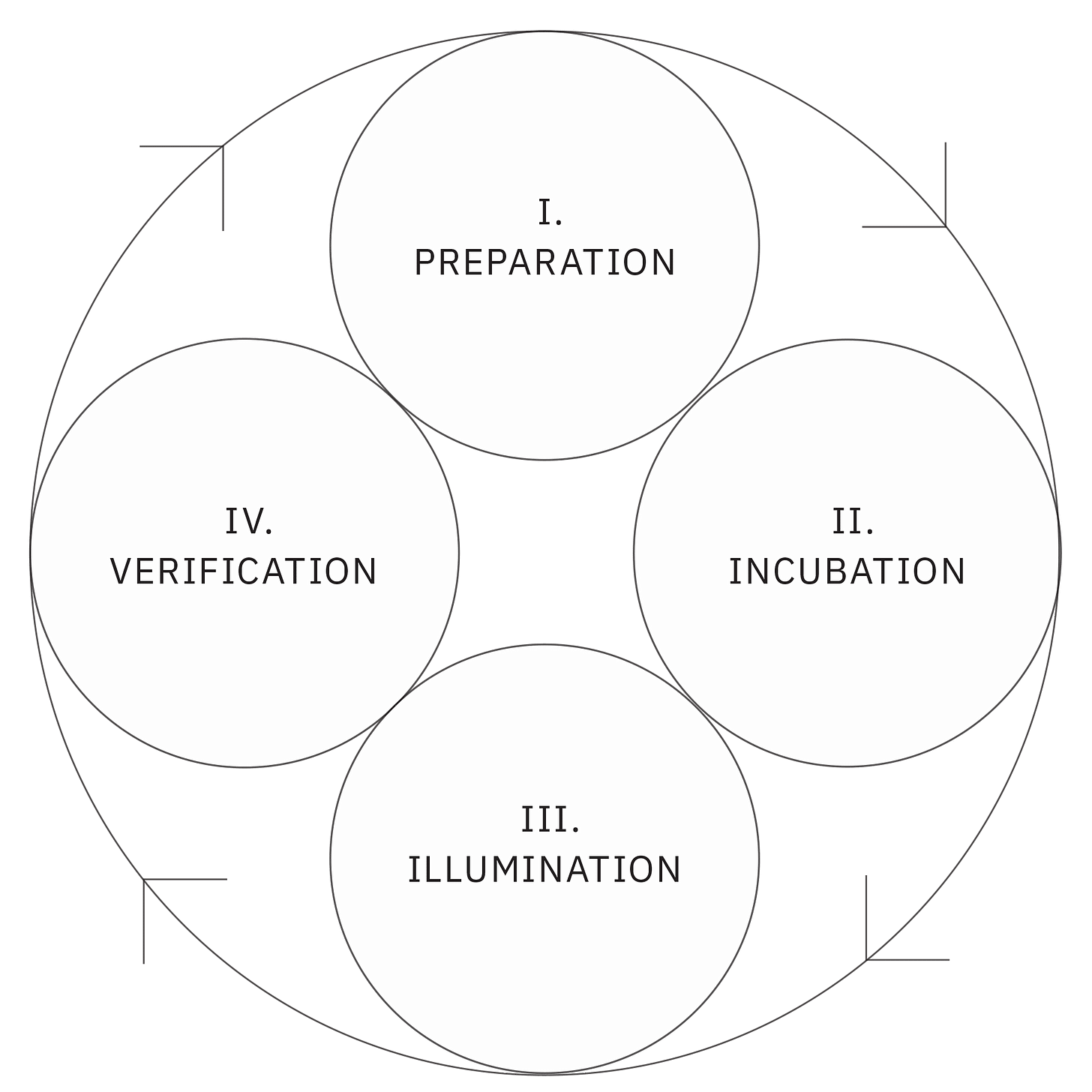
Our culture optimizes for speed and output but art, creativity, curation and taste, the things that makes us irreducibly human, require time. Time needed to develop perspectives of our own. Time that is neurologically necessary for unoccupied mental space where meaning can form. The same way we digest food to absorb the nutrients fully, we need to allow our unconscious to process what is consumed consciously for full understanding.
But time isn’t all that is missing in the prompt to output equation. When you outsource a thought to AI, you get the most statistically likely version of that idea. An idea that is condensed from the many that are out there. The more that we allow AI to mediate our thinking, the less room there is for anything genuinely new to emerge. This is so different than when we use our own brains to solve a problem and end up going in infinite directions as we explore different possibilities. Yes, it’s not the most efficient but we get to explore so many versions of an idea before making a conscious decision.
With AI, we are perpetually stuck in a cultural feedback loop if you think about it… collectively being shaped by content that already exists as it gets flattened into narrower versions of itself. Kane Parson, Director of Backrooms, said in a recent interview, “To me, generative AI feels less like innovation than a symptom of a broader culture and economic rot” and I can’t help but agree.
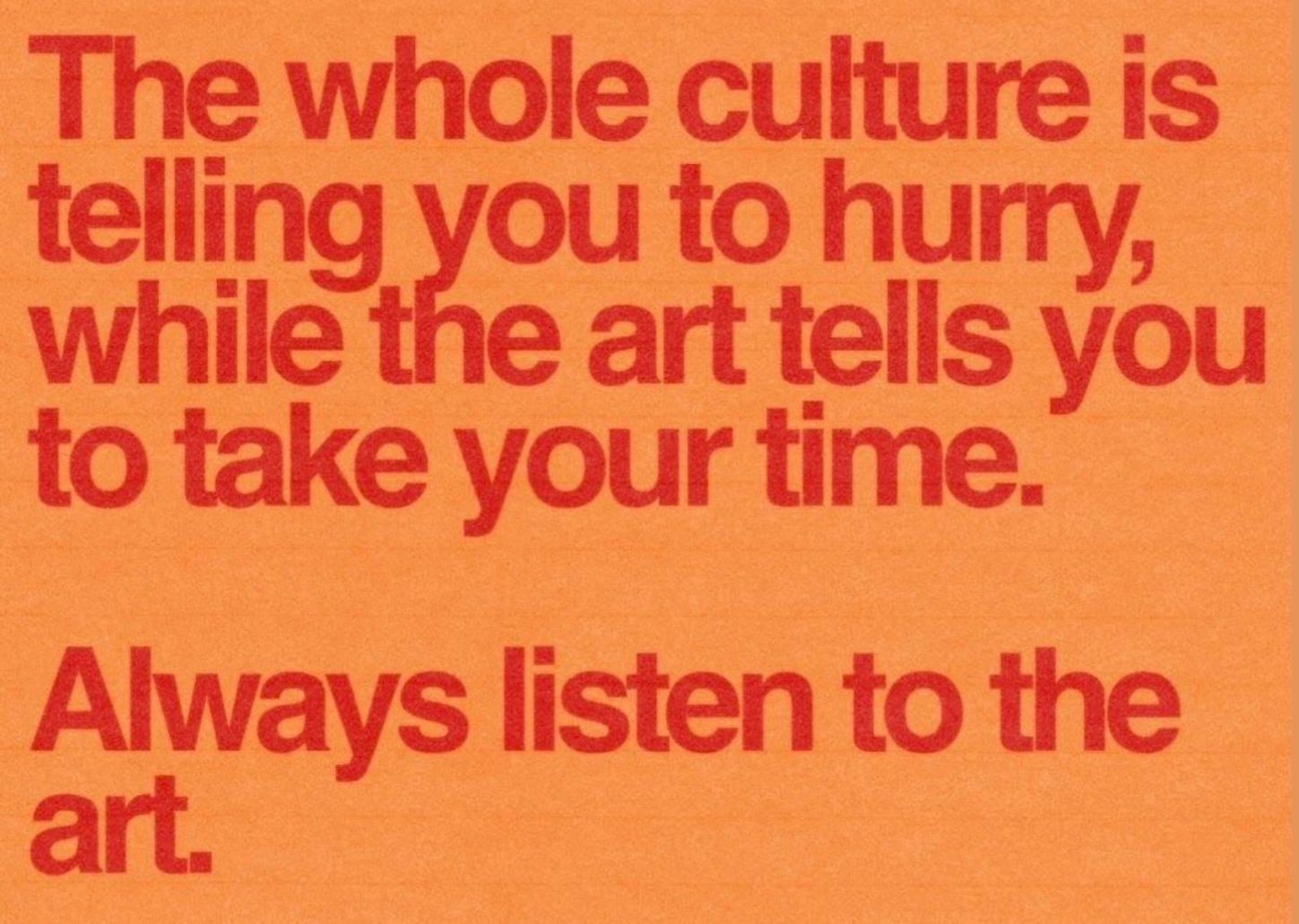 By Junot Díaz
Even if you aren’t the one actively engaging with AI tools, what is terrifying is how it’s reshaping the way we all think and talk through different means. A recent study shows that Large Language Models (LLMs) are homogenizing people’s language, perspectives, and reasoning which are the very things that reflect human creativity. The circulation of AI generated text, whether useful or not, becomes the language we learn from. We start to adopt the same sentence rhythms and argument structure. I know there is already so many people pushing back on the use of AI because of this, and when I read content that feels genuinely human, I have a newfound appreciation for it.
It’s impossible to think that we can all just collectively stop the use of AI so let’s learn to live in tandem with it. I am still figuring out where AI belongs in my work (and in my personal life). What I know for now is that the things that don’t require me (like coding or the spreadsheet that needs organizing), AI is perfect for the job. But the writing, the content, the designs, the brand ethos… the things I’ve been precious with, I will never outsource. That’s the line I am drawing. I am not against the tools but in defense of the creative process.
So, whatever you are building right now, resist compressing into the most likely version. The world will always offer you the fastest solution but the fullest version of what you are capable of exists in the time between. It may take longer but, it’s yours.

Further Reading & Exploration
Graham Wallas: The Creative Process
Why Creativity Lives in Silence: The Neuroscience of Mental Gaps.
The Homogenizing Effect of Large Language Models on Human Expression and Thought

